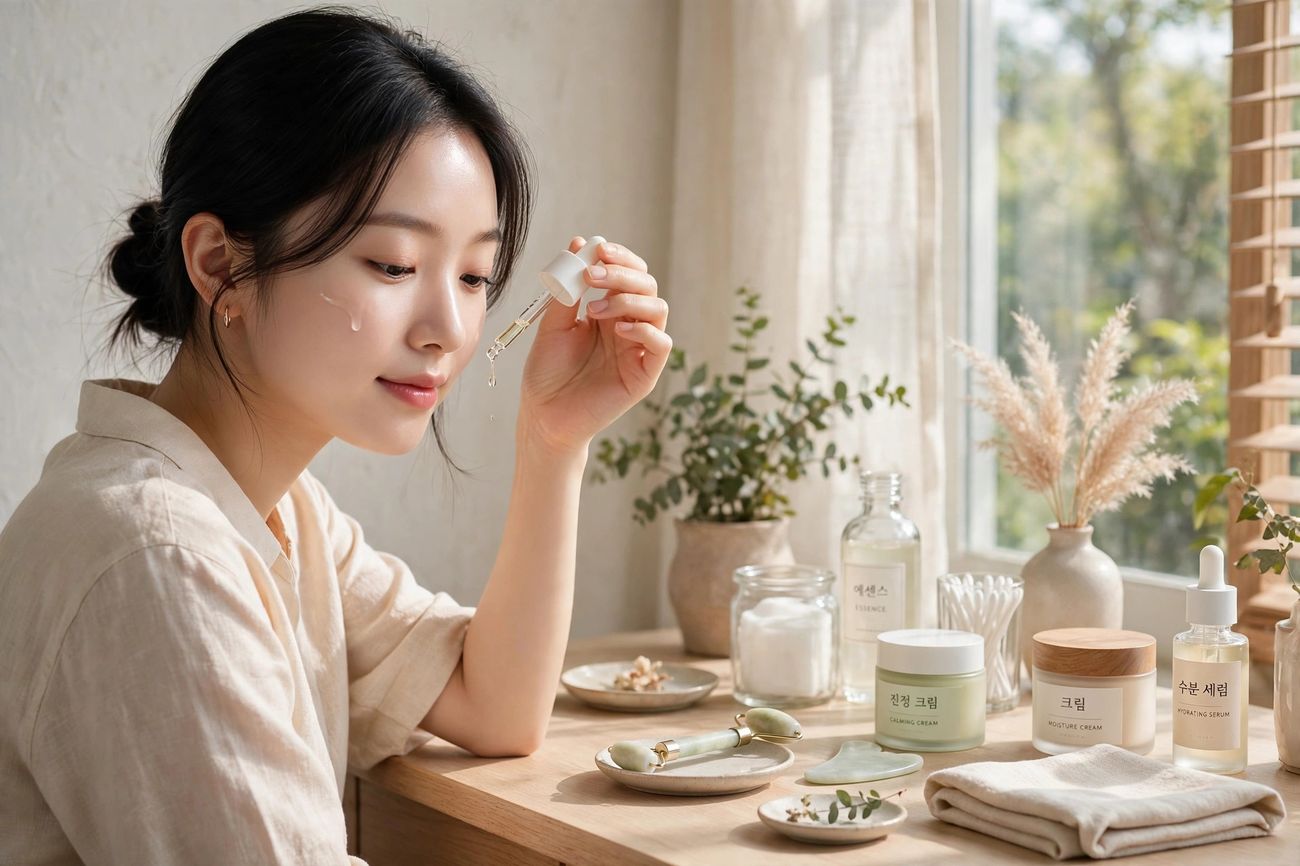
Korean skincare, explained: the routine behind the glow
Korean women are famous for skin that looks lit from within — and it is not genetics or a 10-product marathon. It is a gentle philosophy, a handful of beloved ingredients, and one step nobody skips. Here is what they actually do, morning and night.
Every woman who has watched a Korean drama has had the same thought: how is her skin doing that? The famous Korean glow — clear, plump, almost translucent — is often put down to genetics or filters. The truth is more useful than that. Korean skincare is a philosophy: hydrate deeply, protect the skin barrier, prevent problems instead of punishing them, and be gentle every single day. Products matter, but habits matter more. Here is the routine as Korean women actually live it.
The morning routine, step by step
- A soft start. Many Korean women skip the foaming cleanser in the morning entirely, rinsing with water only, or use a very gentle low-pH cleanser. Overnight skin is not dirty — stripping it is the enemy.
- Hydrating toner. Not the harsh, alcohol-heavy toners of the past: Korean toners are watery hydrators, patted on with the hands (never dragged with cotton) to flood the skin with moisture while it is still slightly damp.
- Essence. The step the rest of the world borrowed from Korea — a light, concentrated water-serum hybrid that adds another layer of hydration and helps everything after it absorb better.
- Serum or ampoule. The targeted step: brightening, calming or firming, depending on the day and the skin.
- Moisturiser. A barrier-supporting cream — look for ceramides and panthenol on the label — to seal all that water in.
- Sunscreen. The non-negotiable. If there is one true secret, it is this one. Korean women treat SPF as skincare, not beachwear: applied every morning, in real amounts, and often re-applied during the day with sun sticks or cushion compacts that go over makeup. Much of the “youthful” look the world envies is simply decades of never letting the sun undo the routine.
The evening routine, where the real work happens
- Double cleansing. First an oil cleanser or balm to melt sunscreen and makeup, then a gentle water-based foam to wash the day away. This two-step clean — thorough but never squeaky — is the foundation everything else stands on.
- Gentle exfoliation, a few times a week. Not scrubs: mild chemical exfoliants (PHA and gentle AHA/BHA) used two or three times weekly to keep texture smooth.
- Toner and essence again, layered while the skin is damp. Some women repeat the toner in thin layers — an older trend called the “7-skin method” — though most now stop at one or two generous layers.
- Treatment step. The evening is when serums do their slow work.
- Sheet masks, a few nights a week. The famous 15-minute mask is a hydration event, not an everyday duty.
- Eye cream, then a richer night cream or a sleeping mask to lock everything down overnight.
About those “10 steps” — the honest update
The “10-step Korean routine” became famous worldwide as a fixed list. In Korea itself, it was always more of a menu than a rule — you picked the steps your skin needed that day. And the trend has kept moving: the modern Korean routine is usually four to six steps, with the effort shifted from more products to barrier health. The current buzzword is “slow aging” — caring for the skin barrier early and calmly, instead of attacking the skin with strong actives later. Fewer, gentler, consistent beats ten steps done in a panic.
The ingredients Korean women swear by
- Snail mucin — not a gimmick in Korea but a hydration and barrier staple, loved for helping skin recover and hold moisture.
- Rice water and rice extract — a centuries-old beauty tradition, still everywhere, for a brighter, more even look.
- Ginseng and hanbang — traditional Korean herbal medicine ingredients (ginseng, mugwort) enjoying a full revival in modern formulas.
- Propolis — the honey-like glow ingredient behind many “honey skin” products.
- Centella (cica) and heartleaf — the calming pair for sensitive, easily-reddened skin; cica creams are a Korean pharmacy icon.
- Fermented ingredients (galactomyces, bifida) — fermentation breaks ingredients into smaller pieces skin can use more easily; a K-beauty signature since long before it was fashionable.
- Niacinamide and ceramides — the reliable modern pair for tone and barrier strength.
- PDRN — the ingredient of the moment: derived from salmon DNA, it started in Seoul skin clinics and has now moved into serums all over Olive Young, marketed for repair and resilience. Plant-based versions exist for those who prefer them.
Glass skin, bloom skin: what the glow words actually mean
Glass skin describes skin so hydrated and smooth it looks almost reflective — poreless-looking, dewy, translucent. It is not a makeup finish; it is what deep, layered hydration looks like on healthy skin. Korea’s newer term, bloom skin, is the softer evolution: a fresh, healthy radiance, as if the skin is well-rested rather than polished. Both looks come from the same place — water, barrier care and sun protection, repeated daily. No highlighter required.
How to start, without buying ten products
- Begin with the core four: a gentle cleanser, a hydrating toner or essence, a ceramide moisturiser, and a sunscreen you genuinely like wearing.
- Add one treatment at a time, and patch-test new products — Korean skincare culture is patient, and skin rewards patience.
- Judge a routine after weeks, not days. The Korean approach is a lifestyle of small daily care, not a weekend overhaul.
- And the most Korean rule of all: never skip the sunscreen, even on cloudy days, even indoors near windows.
Buying it in Seoul
Half the fun is shopping where Korean women actually shop. The giant of them all is Olive Young, and our beginner’s guide walks you through it aisle by aisle: Olive Young for beginners. If your Korean is still at hello-and-thank-you level, our shopping phrases will carry you through any beauty counter in the city.
A note in honesty: this guide describes popular cosmetic routines and ingredients, not medical treatment. Products affect every skin differently — patch-test new actives, introduce them slowly, and see a dermatologist for persistent skin conditions. Routine details reflect Korean beauty sources and trends as of October 2026.