Hanbok history: the story of Korea’s traditional clothing
It looks like a painting brought to life — but the hanbok was everyday clothing for centuries before it was a photo opportunity. Where it came from, how it changed, what its parts and colours really mean, and the myths to stop believing.
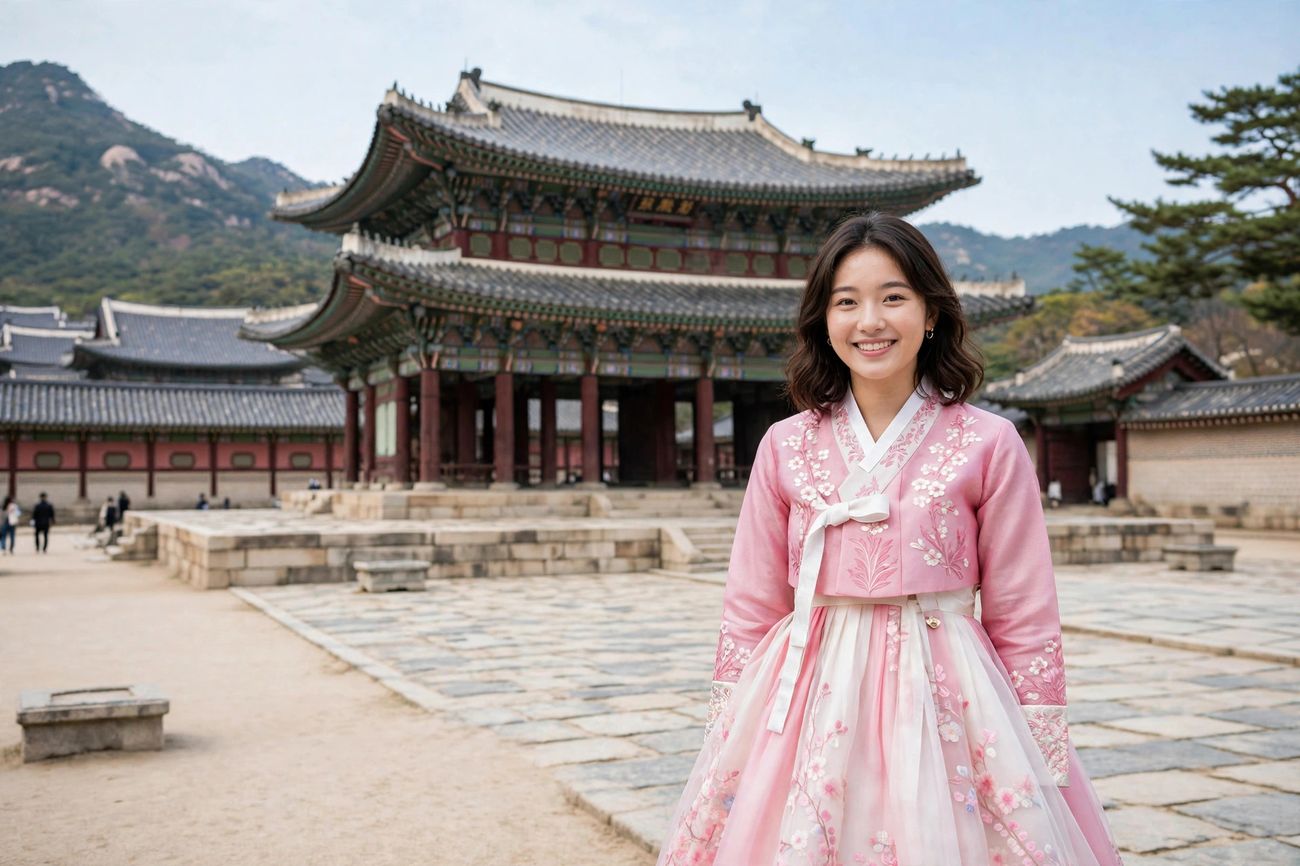
A hanbok can look almost like a painting brought to life: flowing lines, graceful sleeves, a short jacket, and a skirt that seems to move like a flower in the breeze. But behind its beauty is a much deeper story. For centuries, Korean clothing reflected the country’s climate, social customs, craftsmanship and ideas about beauty.
The word hanbok (한복) means simply “Korean clothing.” Today it usually refers to traditional Korean dress — the jeogori jacket, the chima skirt, the baji trousers. But the hanbok has never been one unchanging outfit. Its shape, fabric, colours and details evolved across more than a thousand years of Korean history.
Where the hanbok began
The roots of Korean traditional clothing reach back well over a thousand years. Archaeological discoveries, historical records and tomb paintings help researchers reconstruct how early clothing was shaped, because surviving fabric from ancient times is rare.
Early Korean garments used practical, separate pieces: jackets or upper garments, trousers, skirts, belts and outer robes. That design let people move comfortably while working, riding and travelling, and the layers suited cold winters. During the Three Kingdoms period (Goguryeo, Baekje and Silla), styles shared broad features while developing their own details — murals in Goguryeo tombs show people in jackets, trousers, skirts and robes much like the families of pieces we still recognise.
And nobody wore “the same” outfit: garments differed by region, occupation, age, wealth and occasion. The hanbok’s famous beauty grew from a practical foundation — it was real clothing for real lives long before it was ceremonial dress.
Three kingdoms, Goryeo, and the Joseon silhouette
Through the Goryeo dynasty (918–1392), court dress, textile production and silhouettes kept changing, shaped by Korea’s diplomatic and commercial exchanges with the rest of Asia — influences Korean craftspeople always adapted to their own tastes rather than simply copying.
When people picture a classic hanbok — a fitted jeogori and a full, high-waisted chima — they are usually imagining the Joseon dynasty (1392–1897). Across those five centuries, clothing developed under Confucian social rules, court protocol and strict distinctions of rank. Proportions kept shifting with fashion: jacket lengths, sleeve shapes, skirt volume and collars all changed, and the very short women’s jeogori of late Joseon was never the universal form. This is exactly why hanbok looks different from one historical drama to another — the period being depicted matters.
The main parts of a hanbok
- Jeogori — the jacket. The upper garment for men and women, with a crossed front, ribbon ties (the otgoreum) and a collar line called the git. Decorative edging on the sleeves is called kkeutdong.
- Chima — the skirt. The long wrap skirt of women’s hanbok, worn high and opening into the generous, flowing shape that moves so beautifully in dance and photographs.
- Baji — the trousers. Roomy trousers that made movement and work easy; the base of men’s hanbok, combined with a jeogori and often a vest or coat.
- Durumagi — the outer robe. A traditional overcoat worn for warmth and formality; its design varies by period, gender and occasion.
- The finishing details. Belts, ribbons, embroidered shoes, headwear and hair ornaments — a wedding outfit could be far more elaborate than anything worn on an ordinary day.
What the colours mean — and what they don’t
Bright pinks, deep blues, jade greens, ivory, crimson and gold all appear in hanbok — but colour symbolism is not a simple universal code. Meanings shifted with period, status, ceremony and personal choice. One concept often discussed is obangsaek, the five colours of traditional Korean cosmology — blue (or green), red, yellow, white and black — associated with the five directions, which influenced art, decoration and ceremonial dress across Korea.
White holds a special place: white garments were widely worn by ordinary people in many periods, though the idea that all Koreans always wore white is an oversimplification — coloured and richly decorated clothing always existed for those who could access fine materials and for formal occasions. The better question is never just “what does this colour mean?” but “who is wearing it, in which period, and for what occasion?”
Clothing, class and everyday life
Hanbok’s history is also a history of social difference. Clothing signalled wealth, occupation, age, marital status and official position, and sumptuary rules sometimes regulated what people were allowed to wear. Royal and aristocratic outfits used fine silk, intricate embroidery and layered fabrics; ordinary families relied on practical materials, repaired garments and handed them down between generations.
Yet traditional clothing was never just a uniform imposed from above. Special clothes for weddings, holidays and milestones became part of the memory of the event itself — the colours and formal layers marked the day as different from an ordinary one.
How the hanbok survived the modern age
In the late nineteenth and twentieth centuries, Western-style clothing became common in schools, offices and factories — easier for modern routines and mass-produced for daily wear. The hanbok did not disappear; its role shifted, becoming the clothing of weddings, major family celebrations, holidays and cultural events.
Modern designers have since reworked it with lighter fabrics, simplified ties and easier-care materials. There is no single dividing line between “traditional” and “modern” hanbok: some designs preserve historic forms closely, others use hanbok elements as inspiration for contemporary fashion. Clothing traditions have always evolved — the modern hanbok is that evolution continuing, not a betrayal of it.
Four myths about the hanbok
- “It has always looked exactly the same.” No — its shape and details changed over centuries; paintings, museum pieces, dramas and modern celebrations may all show different periods.
- “Only royalty wore it.” Royal garments are the memorable ones, but ordinary people wore traditional clothing every day, in practical forms suited to their means.
- “Every colour has one fixed meaning.” Associations are real but contextual — they depend on the garment, event, period and wearer.
- “Modern hanbok is fake hanbok.” Traditions evolve. Judge a design by how thoughtfully it treats the tradition, not by a purity test.
Wearing a hanbok in Seoul today
Today you will see hanbok at palaces, heritage villages, festivals, weddings and all over social media — and visitors are genuinely welcome to wear it. Rental shops cluster around Gyeongbokgung, Bukchon and Insadong, and there is a beloved practical perk: visitors wearing hanbok enter Seoul’s royal palaces free. Treat the garment with the care this history deserves — follow the rental shop’s guidance, handle the accessories gently, and be considerate when photographing in historic and religious spaces. Our companion guide covers the practical side: what to know before you rent a hanbok, and the palace most people wear one to is covered in our first-timer’s guide to Gyeongbokgung.
Questions people ask
What does “hanbok” mean? Simply “Korean clothing” — the word now commonly describes traditional Korean dress.
When did the hanbok originate? Its roots reach back to ancient Korean societies and evolved over many centuries; there is no single date when the modern form suddenly appeared.
Do Koreans still wear hanbok? Yes — for weddings, holidays like Seollal and Chuseok, family celebrations, cultural events and photographs, and it continues to inspire modern fashion.
Can visitors wear it? Absolutely. Rental is easy in Seoul’s historic areas, it is welcomed rather than frowned upon, and as this history shows, you will be wearing a living tradition — not a costume from a museum shelf.
The next time you see someone in a hanbok, look for the details: the shape of the jeogori, the movement of the chima, the outer robe, the colours. Whatever the context — a modern design, a formal ceremony, a traveller at a palace gate — the garment carries a story worth discovering. For more pieces of that story, see the traditional Korean items you should know.
Adapted from a reader-submitted draft and fact-checked against Korean cultural-heritage and museum references, October 2026.