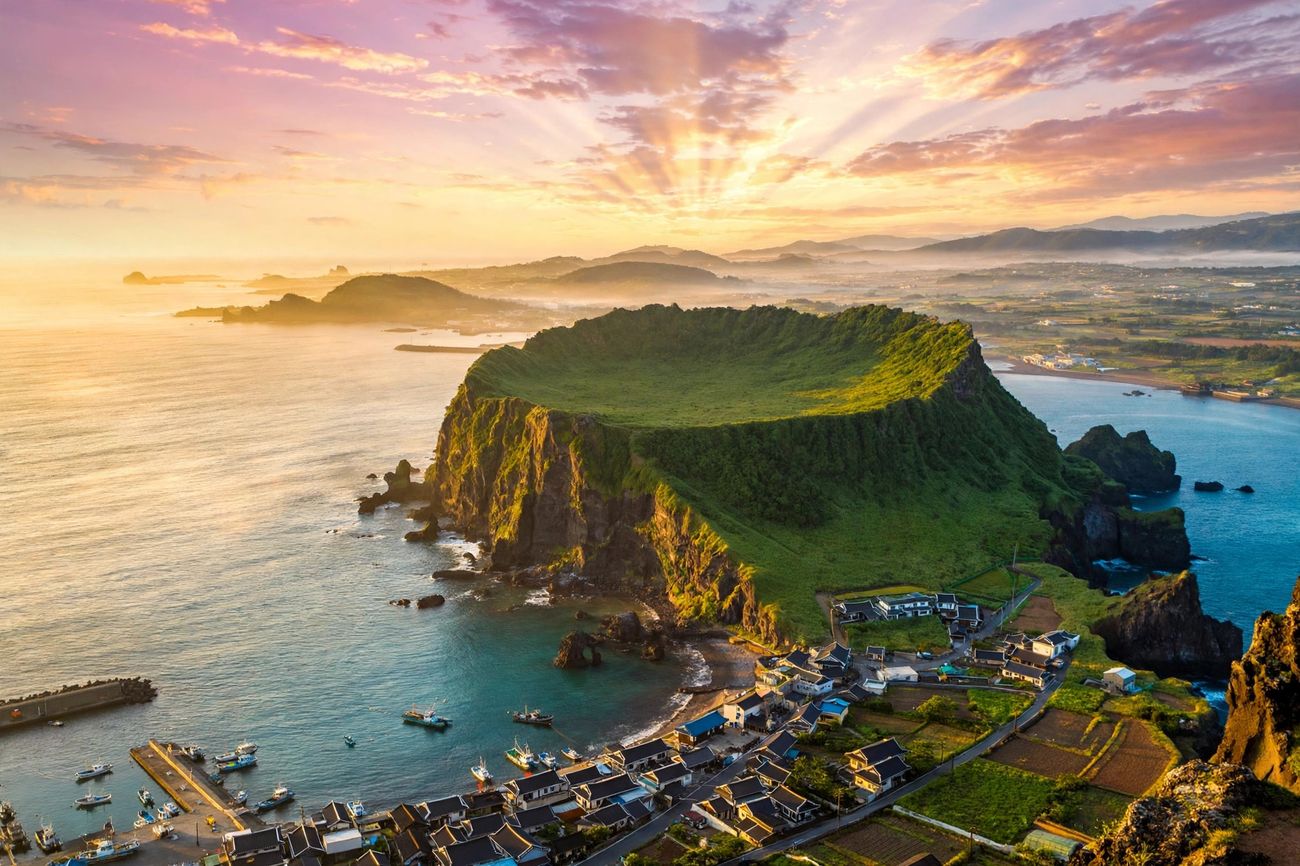
Jeju Island, South Korea: 10 beautiful places to visit on Korea’s island paradise
Discover 10 beautiful places to visit on Jeju Island, South Korea — Seongsan Ilchulbong, Hallasan, turquoise beaches, lava caves and local markets — plus the best time to go, what to eat, and a sample three-day itinerary.
Imagine waking up to the sound of ocean waves, walking along a coastline framed by volcanic cliffs, exploring green mountain trails, and ending the day with a Korean meal overlooking the sea. That is the kind of experience that makes Jeju Island, South Korea, such a memorable destination.
Located off the southern coast of the Korean Peninsula, Jeju offers a different atmosphere from the busy streets of Seoul. Instead of skyscrapers and shopping districts, visitors discover coastal villages, volcanic landscapes, traditional markets, countryside roads and beautiful natural scenery. Jeju is recognised for its exceptional geology and holds UNESCO World Natural Heritage status for its volcanic sites. Whether you are planning your first trip to South Korea or simply filling a travel bucket list, Jeju deserves a place on it. In this guide: ten places to visit, the best times to experience the island, local foods to try, and practical tips to plan the journey.
What makes Jeju Island so special?
Jeju is not simply a beach destination. Its character comes from the combination of volcanic geology, dramatic coastal scenery, mountain landscapes, local traditions and a distinct island lifestyle. At the centre of the island stands Hallasan, a volcanic mountain rising above the countryside. Along the coast you will find rocky shorelines, sandy beaches, fishing communities and unusual volcanic formations — plus traditional markets, regional food, scenic walking trails and smaller islands nearby. That variety is Jeju's biggest attraction: one day on a volcanic peak, the next beside turquoise water, the next discovering local food and culture.
1. Seongsan Ilchulbong — a spectacular sunrise destination
Seongsan Ilchulbong is one of Jeju's most recognisable natural landmarks. Its name is often translated as "Sunrise Peak", and it is a favourite for travellers who want to experience the island early in the morning. This dramatic volcanic cone developed through an eruption in shallow seawater thousands of years ago; today its steep cliffs rise above the ocean, looking especially striking from the coast. The reward at the top is the view across the crater and the surrounding sea.
- Visit early for morning light and coastal views.
- Photograph the volcanic cliffs from the viewpoints around the base.
- Explore the surrounding coastal area while you are there.
- Check current access rules and admission details before visiting.
The climb involves steps and an uphill walk, so comfortable footwear is recommended. If you prefer a relaxed visit, the scenery is still wonderful from the viewpoints around the area. Best for: nature lovers, photographers, sunrise enthusiasts and first-time visitors.
2. Hallasan National Park — South Korea's highest mountain
For travellers who love mountains, forests and hiking, Hallasan National Park is one of Jeju's most important destinations. Hallasan rises to approximately 1,947 metres and is the highest mountain in South Korea. Its slopes hold different vegetation zones, and its volcanic landscape explains how the island was formed. The mountain changes dramatically with the seasons: fresh greenery and flowers in spring, lush summer forest, colourful autumn foliage, and winter snow on the higher ground. You do not need to hike to the summit to enjoy it — shorter walking routes suit most fitness levels, while the full summit trails are a demanding, rewarding day.
- Check official trail conditions and the weather forecast first.
- Confirm whether your chosen route requires a reservation — the summit routes do.
- Bring water, suitable clothing and proper hiking shoes.
- Start early if you are attempting a longer route, and never assume summit access in bad weather.
Best for: hikers, outdoor enthusiasts, and travellers interested in volcanic landscapes.
3. Hyeopjae Beach — turquoise water and relaxing views
If you picture a peaceful beach with clear blue-green water and a beautiful island backdrop, Hyeopjae Beach is worth considering. Located on Jeju's western side, it is known for its coastal scenery and views toward Biyangdo Island. On a clear day, the contrast between the water, pale sand and surrounding landscape makes for excellent photographs.
- Take a relaxing walk beside the water.
- Photograph the coastline and the distant island views.
- Enjoy the cafés and local restaurants nearby.
- Plan a peaceful afternoon near the coast.
Conditions vary through the year, so check local weather and sea conditions before swimming. Best for: beach lovers, scenic photography and relaxed coastal outings.
4. The Jeju Olle Trail — discover the island on foot
Some of the most memorable travel experiences happen at walking pace. The Jeju Olle Trail network lets you discover the island through coastal paths, countryside scenery, villages and quieter corners that visitors miss while driving directly between famous attractions. You may pass rocky coastlines, fields, small settlements and viewpoints over the ocean, and each route offers a different mix, so you can choose a section that matches your schedule and fitness. You do not need to complete an entire route to appreciate it — even a shorter walk can become a highlight of the trip.
- Choose a route based on distance and difficulty.
- Wear comfortable walking shoes, and carry water and sun protection.
- Check route conditions and transport options before setting out.
- Leave enough time to return safely before dark.
Best for: slow travel, solo travellers, nature lovers and walking holidays.
5. Seopjikoji — dramatic coastal scenery and open views
Seopjikoji is a scenic coastal area on Jeju's eastern side, known for its open landscapes, walking paths and views of the sea. The coastline combines grassy slopes, rocky formations and expansive ocean views; on a clear day the setting feels wonderfully open, which makes it attractive for photography and leisurely walks. Unlike an attraction that demands a full day, Seopjikoji fits neatly into a wider eastern-Jeju itinerary alongside Seongsan Ilchulbong. For photographs, capture the coastal path and the contrast between grass and sea rather than only close-ups — and bring an extra layer, because the wind can change the experience completely. Best for: coastal walks, photography, and travellers exploring eastern Jeju.
6. Jeju's lava caves — the island's volcanic history underground
Jeju's natural beauty is not limited to what you can see above ground. The island also contains lava tubes created by ancient volcanic activity: as lava flowed and later cooled, it left behind cave systems with distinctive walls, shapes and rock features. The Geomunoreum Lava Tube System is among the island's important geological attractions and part of the UNESCO listing. Manjanggul, the most famous tube, has been closed for restoration work in recent years, so verify its current opening status on the official Visit Jeju site before planning around it — access to natural sites changes for safety and conservation. If a particular cave is closed, another open geological attraction will still tell the story: Jeju is much more than a beautiful island, its landscape records powerful natural forces. Best for: curious travellers, geology enthusiasts and natural-history fans. Follow marked paths, wear shoes for uneven surfaces, and never enter restricted areas.
7. Iho Tewoo Beach — a different side of Jeju's coast
Iho Tewoo Beach is another coastal stop to consider, especially if you want somewhere closer to Jeju City. One of its recognisable features is the pair of horse-shaped lighthouses near the shore — a distinctive landmark against the coastal landscape and a fun addition to a photography itinerary. The beach is a useful option when you want the ocean without a long excursion: visit around sunset, walk the shore, or stop by before or after other Jeju City activities. Check sunset times and local conditions if you are planning around a particular view. Best for: easy coastal outings, photography, and visitors staying around Jeju City.
8. Dongmun Traditional Market — taste the flavours of Jeju
Travel is not only about landscapes. Food markets reveal the character of a place, and Dongmun Traditional Market is the stop for exploring Jeju's local food culture. Browse food stalls, local products, snacks and regional specialties, and discover ingredients and dishes that differ from those commonly associated with Seoul. Depending on the vendors and season, you may encounter seafood, locally grown produce, prepared foods and Jeju-inspired snacks.
- Walk through several sections before deciding what to eat.
- Ask vendors about unfamiliar dishes when possible, and check prices before ordering.
- Bring cash as a backup, even if some sellers accept cards.
- Be mindful of food allergies and dietary requirements.
Markets get busy in popular periods, so allow time to browse rather than rushing. Best for: food enthusiasts, cultural travellers, and anyone interested in local specialties.
9. Udo Island — a small island worth considering
If you have extra time in Jeju, consider a trip to Udo Island, just off the eastern coast. Udo is known for its coastal scenery, local food and slower pace; its beaches, roads and village areas feel different again from Jeju's main tourist centres. It makes a rewarding day trip, but plan around ferry schedules and weather.
- Check the latest ferry timetable from Seongsan Port.
- Confirm the rules for bringing rental vehicles.
- Leave enough time for the return journey, and check weather-related service changes.
- Decide whether you prefer walking, cycling or permitted local transport.
The journey itself is part of the experience, and the island is best enjoyed without squeezing in too many stops. Best for: travellers with additional time, scenic day trips, and smaller-island exploring.
10. Jeju's countryside and coastal villages — a slower pace
Beyond the famous landmarks, Jeju's countryside offers another reason to visit. Quiet roads, fields, small villages, coastal paths and local cafés let you experience the island without following the busiest tourist routes all day. This side of Jeju suits slow travel: more time in fewer places. Explore a coastal village in the morning, stop for a local meal, and spend the afternoon walking beside the sea. One caution: rural transport and services are less frequent than in the cities, so check how you will return to your accommodation before heading somewhere quiet. Best for: slow travellers, photographers, couples, and visitors who want to explore beyond the major attractions.
What is the best time to visit Jeju Island?
Jeju can be visited throughout the year, but each season offers a different experience. Spring brings flowers and fresh landscapes — cherry blossom and other seasonal blooms add colour, though exact flowering dates vary with the weather; it is a good season for walking, sightseeing and photography. Summer is beach season, with coastal scenery and outdoor activities, but it can be hot, humid and rainy, with changing sea conditions, so build flexibility into your plans. Autumn can be an excellent choice for walking trails and countryside exploring, with cooler conditions and seasonal foliage (the same weeks our November guide covers on the mainland). Winter offers a quieter island, cooler coastal weather and possible snow on Hallasan's higher ground, with some activities affected by wind or trail restrictions. A useful rule: choose your dates by the experiences you value most, not by a single photograph of Jeju in one season. Our best time to visit Korea guide works through the same seasons for the mainland.
How to get to Jeju Island
For most travellers, flying is the most convenient way to reach Jeju. Domestic flights connect the island with several South Korean cities, including Seoul and Busan (and if you are flying in from overseas, you may connect through another Korean airport or use an available direct international service into Jeju International Airport). Compare arrival times, luggage allowances and onward transport before choosing. Jeju can also be reached by ferry from selected mainland ports — a pleasant alternative if you enjoy a sea journey or want to bring an eligible vehicle — but routes, journey times and schedules vary, so confirm the operator's latest timetable and boarding requirements directly.
How to get around Jeju Island
Transport matters in Jeju because the attractions are spread across the island. A rental car gives the most flexibility, especially for combining beaches, countryside and attractions in one day; international visitors should check the driving licence and International Driving Permit requirements that apply to them before booking, and consider parking, insurance and whether they are comfortable driving in South Korea. Public buses connect Jeju City, Seogwipo, major beaches and various tourist areas, and can work well with careful planning, although journeys take longer than driving directly. Taxis and organised tours are useful when public transport does not fit your schedule; compare the total cost with other options, especially when travelling with companions. One tip that saves hours: choose accommodation based on the region you want to explore, so you are not crossing the island every day.
What food should you try on Jeju Island?
Jeju's food culture is shaped by its island location, agricultural products and local traditions — and food is part of experiencing the destination, not just a break between sights. Start with these (our first-timer's guide to Korean dishes covers the mainland classics to compare against):
- Jeju black pork. One of the island's best-known specialties, usually served grilled with side dishes and dipping sauces. Look for a restaurant that specialises in it, and check the menu and prices before ordering.
- Fresh seafood. Depending on the restaurant and season: fish dishes, seafood soups, grilled seafood and other regional preparations. Ask about ingredients and preparation if you have allergies or dietary restrictions.
- Hallabong and other citrus. Jeju is associated with citrus cultivation, including the distinctive hallabong. Expect fresh fruit, juices, desserts and packaged products featuring local citrus.
- Local market snacks. Markets and small food shops are good places to discover regional treats; the selection changes by vendor and season, so ask what is locally popular when you visit.
How many days do you need in Jeju?
- One to two days: focus on a small area and a few major highlights. Do not try to circle the entire island in a short visit.
- Three days: a practical starting point — Jeju City plus the eastern coast, or the southern coast and nearby attractions.
- Four to five days: time to combine beaches, nature, local food, walking trails and a Udo day trip if conditions allow.
- A week or longer: for travellers who prefer a slower pace and want to explore different parts of the island without rushing.
These are planning ranges, not fixed rules: driving times, weather, attraction access and ferry schedules all change how much you can comfortably do.
A sample three-day Jeju itinerary
- Day 1 — Jeju City and the coast: arrive at Jeju International Airport, explore Dongmun Traditional Market, visit Iho Tewoo Beach if time and weather permit, enjoy a local dinner and rest.
- Day 2 — Eastern Jeju: Seongsan Ilchulbong, the surrounding coastline, Seopjikoji, and a ferry to Udo only if you have enough time and current services permit.
- Day 3 — Nature and scenic walks: a suitable Hallasan-area trail or another nature walk, a beach or coastal village that fits your route, and a relaxed meal before departing.
This outline is intentionally flexible. A Hallasan summit hike may require more time and advance planning, so do not combine a demanding hike with several distant attractions on the same day. (Staying on the mainland instead? Our 3-day Seoul itinerary is the sister plan.)
Practical travel tips for first-time visitors
- Check the weather. Wind and rain can affect outdoor activities and ferry services.
- Plan transport early. Attractions are spread out, and some rural areas have limited bus services.
- Check attraction access. Natural sites and hiking routes can close temporarily for safety or conservation.
- Wear comfortable shoes. Coastal paths, stairs and hiking routes often involve uneven surfaces.
- Allow extra time. Do not build a schedule that depends on every journey running perfectly.
- Respect local communities. Follow signs, keep noise low in residential areas, and take your rubbish with you.
- Check seasonal opening hours. Operating times, admission fees and facilities can change.
- Prepare for language differences. Save addresses in Korean where possible and keep offline map information available.
For current destination information, maps and attraction updates, consult the official Visit Jeju tourism website and the Korea Tourism Organization.
Is Jeju Island worth visiting?
For travellers who enjoy nature, coastal scenery, local food and a slower pace, Jeju can be a rewarding addition to a South Korea itinerary. Its appeal is the variety: the volcanic scenery of Seongsan Ilchulbong, the mountain environment of Hallasan, the walking routes of the Olle Trail, the beaches of the western coast, and the food culture of the local markets. You do not need to visit every attraction to appreciate the island — choose the places that suit your interests, allow enough time, and leave room for unexpected discoveries. Jeju also makes a useful contrast with Seoul (which even has its own southern coastal escape to Busan): where Seoul offers urban energy, shopping and city life, Jeju gives you nature, open landscapes and the coast.
South Korea has far more to offer than its capital city. Whether you want to watch the sunrise from a volcanic peak, walk beside the ocean, explore local markets or spend an afternoon in a quiet coastal village, Jeju offers many ways to build a trip around your interests. Start with a few places that excite you most, check the practical details before you travel, and create an itinerary that leaves room to enjoy the journey.
Planning a trip to South Korea? Would you choose Jeju Island's beaches, its volcanic mountains, or its local food first? Tell us in the comments — and keep exploring South Korea with Seoul Diaries.
Adapted from a reader-submitted draft and fact-checked against official tourism references (Visit Jeju and the Korea Tourism Organization), October 2026. Access, fees and transport schedules can change — verify current details before you travel.